Newsletter #3 August 2026
At the start of the year the WhaleX foundation achieved the goal of becoming a charitable organisation with Deductible Gift Receipt (DGR) status. WhaleX Foundation is now poised to make a meaningful impact on marine conservation, with a strong focus on phytoplankton ecosystems (microscopic plants that live in the ocean) and whale protection. We aim to raise awareness, fund crucial research, engage communities, to ensure the long-term sustainability of our oceans. Together, we can create a world where whales and marine ecosystems thrive for generations to come.
As climate change accelerates, there is increasing interest in the ability of phytoplankton to trap excess atmospheric carbon pollution using photosynthesis. Great whales fertilize the ocean with their excrement so the Whale X Foundation is looking to nature that has figured it out first—and best—after millions of years of evolution. The Whale eXcrement fertilisation (WhaleX) approach aims to regenerate ocean ecosystems by purposefully placing nutrients back into the ocean where they are needed.
Over the past few months the WhaleX Foundation has been busy conducting a pilot experiment to investigate the optimal mix of nutrients to use for the Whale eXcrement fertilisation (WhaleX) approach in waters off the southeastern coast of Australia. This project will inform a full scale peer reviewed scientific experiment to be conducted in a laboratory early next year (2027).
Offshore Sortie - Microcosm Pilot Experiment to test Nutrient Effects on a Plankton Community off the East Australian Coast
After a 24 hour weather postponement, on 16th June 2026 the sun shone brightly on our most recent expedition offshore to collect seawater samples. Everything went nicely to plan and we enjoyed some impressive whale watching as we crossed the Humpback Highway on our way home (see pictures in the Humpback Highway section below).
The primary objective of the pilot project was to evaluate and compare the efficacy between three nitrogen and two iron treatments to open-ocean water. To achieve this objective 200 litres of seawater was collected about 5 nautical miles offshore from Cronulla. To ensure the water samples were representative of the water column, water was pumped into eight 25 litre containers filling two from each depth at 20 meters, 15m, 10m and 5m. Despite previous pumping challenges Rob Wheen ensured the operation went swimmingly to the delight of all concerned. Hardly a drop was spilled.
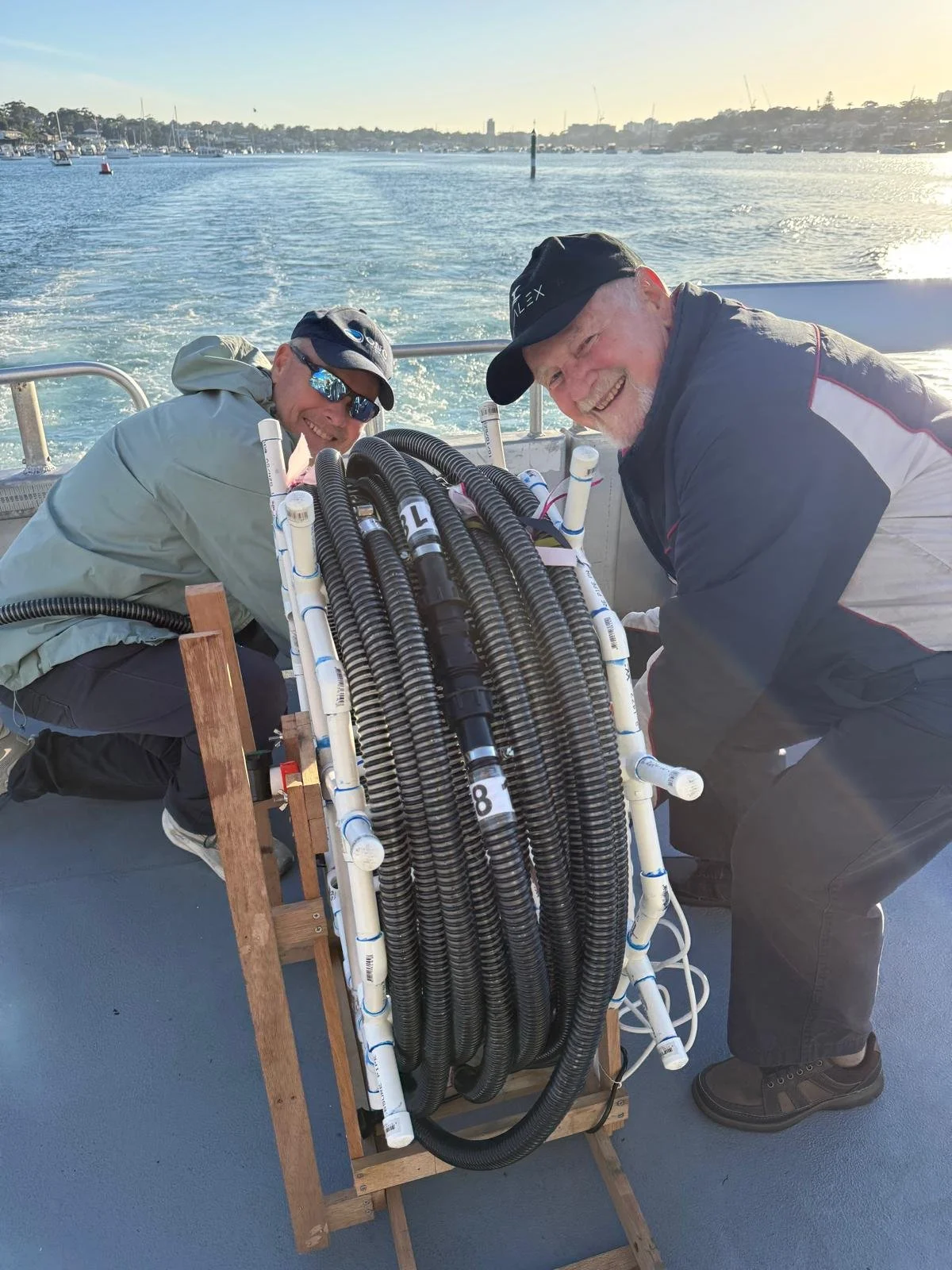
Rob and Peter Wheen setting up the pumping device.
Onshore, Daniel Ng set up a “laboratory” in a storage unit. It was housed in a Bunnings greenhouse tent with a small air conditioner to maintain the temperature. There were two 55 litre transparent bottles (normally for beer brewing) and four 15 litre bottles. Fluorescent lights that could be switched on and off on a 12 hour cycle simulated day and night cycles. As well each bottle (microcosm) had a small external heating belt at the bottom which created convection mixing within each bottle. The experiment involved the addition of different nutrients to each bottle.
Real-time measurement instruments for temperature and chlorophyll, that represents phytoplankton growth, were used to continuously monitor the microcosms. Samples were also collected for analysis by the Sydney Water Laboratory. It was acknowledged that this was a pilot project so the results were not publishable however overall, the pilot project was very successful and will lead to the design and implementation of the next phase of the investigation if sufficient funds can be raised. A full scale experiment is planned to be undertaken early in 2027 in a temperature controlled laboratory with suitable replicates done to lead to publishable scientific results. Edwina also spent many hours peering down a microscope and found the most amazing array of marine life pictured in the Phytoplankton Key to Underwater Life section below.
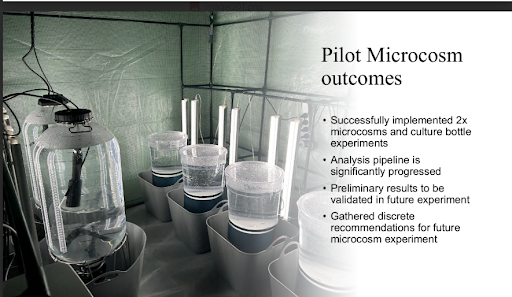
The microcosm experimental setup used a series of 55 litre polyethylene terephthalate (PET) tanks, that were originally designed for home brewing.
Humpback Highway
A couple of professional photographers came aboard the Blue Cat vessel for our water collection sortie, Joey Harrison Painting in Pictures and Brett Lobwein UW Imaging. We were lucky to hit near the peak of the migration season along the Humpback Highway along the East Coast of Australia. From May to August whales migrate north to warmer waters. About 40 000 whales, predominantly humpbacks pass through the Humpback Highway each year. If you want to see this spectacular phenomenon contact Mike Abbott of Cronulla Whale Watching to book a cruise.
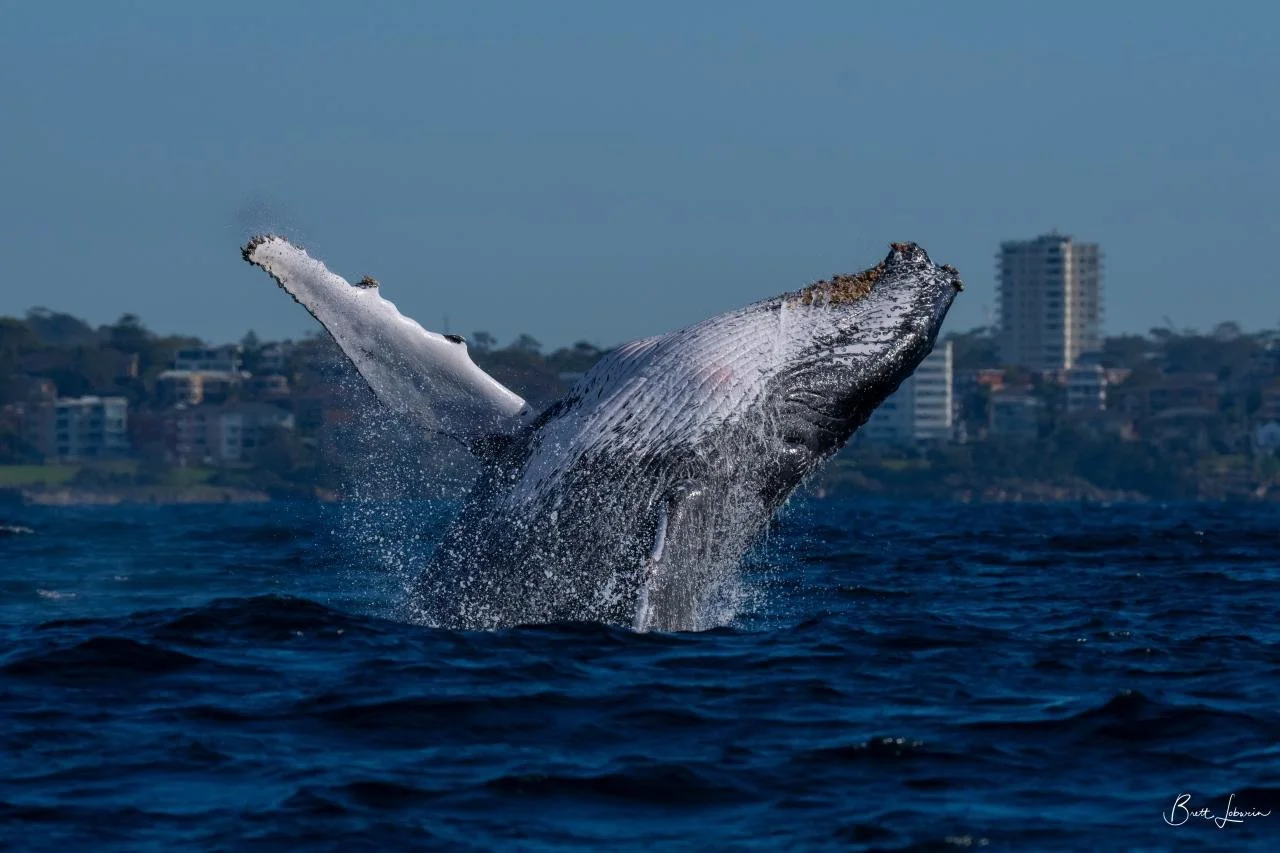
A beautiful humpback whale breaching off Sydney. (Photo credit Brett Lobwein)
Phytoplankton the key to life underwater
Phytoplankton have been essential to life on Earth for over 35 billion years. Through photosynthesis, they consume carbon dioxide on a scale comparable to that of forests and other land plants. Millions of tiny phytoplankton are critical components of the Earth’s system, producing at least 50% of the oxygen we breathe and playing a crucial role in the global carbon cycle. They are the invisible forest that represents around 80% of the biomass in the ocean that is eaten or dies and then sinks as marine snow to sequester gigatonnes of atmospheric carbon dioxide annually.
WhaleX have been analysing water samples collected during the experiments to determine the main types of plankton, including plants (phytoplankton) and animals (zooplankton), that occur in the region of the Tasman Sea near the Port Hacking National Reference Station off the East Coast of Australia. The major functional groups of phytoplankton in the water include Noctiluca, Diatoms as well as Dinoflagellates and Flagellates. A small selection of plankton from our microscope analysis shows the presence of cladocera, green water chain diatoms, copepods and nannochloropsis in the water sample. The WhaleX team will continue to determine the types of plankton in the water to understand what plankton are stimulated to grow in response to various Whale-eXcreta (WhaleX) like nutrient additions.
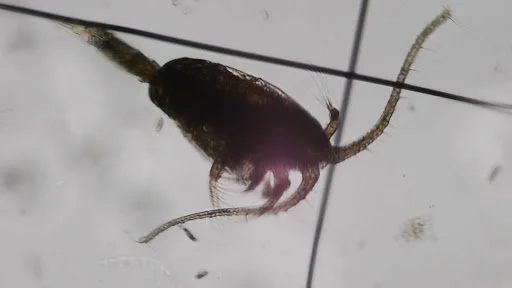
Copepod
meaning 'oar-feet' are a group of small crustations found in nearly every saltwater and freshwater habitat.
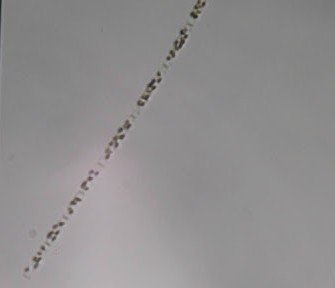
Long Chain Diatom
Diatom are single-celled, photosynthetic algae characterized by unique, glass-like silica cell walls (frustules). As a foundational type of phytoplankton, they account for roughly 40% of total marine primary production and serve as a crucial base for the global ocean food web
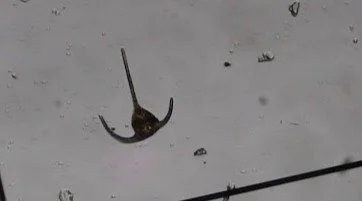
Dinoflagellate
The term "dinoflagellate" is a combination of the Greek dinos (whirling) and the Latin flagellum (whip) signifying the distinctive way in which they swim.
WhaleX Foundation - Meet the Team
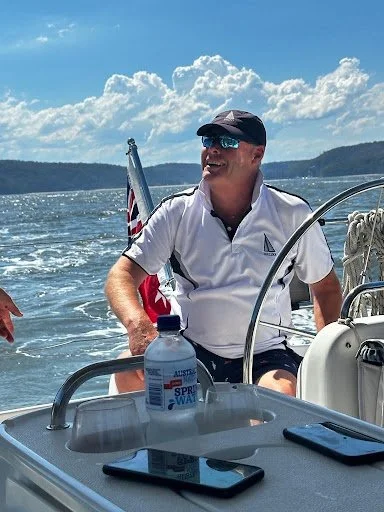
Peter at the helm of his yacht Brizo
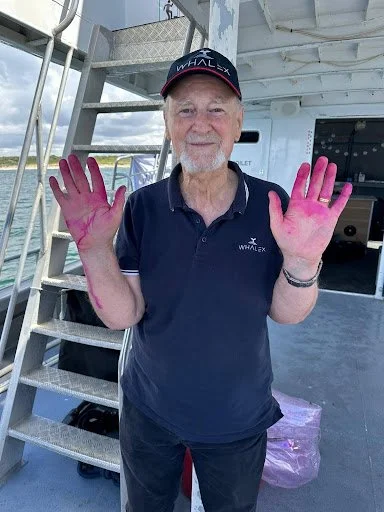
Rob - Guilty as charged
Father and son duo, Rob and Peter Wheen have been obsessed for over two decades with the concept of growing phytoplankton to sequester carbon dioxide, ever since they became aware of Prof. Ian Jones’ concept. Peter is Founding Chairman of the Ocean Nourishment Corporation. Both are civil engineering graduates from The University of Sydney, Peter is a Director of the WhaleX Foundation and Rob lead engineer and problem solver for the team.
Peter has recently retired from a very successful forty-year career, first as a structural engineer with a prominent consulting firm and then through a series of appointments across government and industry ending as Director, Tunnels with Transport for NSW. Early among his many projects is the Ventilation of the Sydney Harbour Tunnel. Other roles include Design Lead for The Airport Rail Link Tunnels and Stations and as Technical Director for the West Connex Stage 3 project among many others.
Rob had a long-standing academic career at the University of Sydney culminating in his role as Head of Civil Engineering. Following graduation he had an early stint as a bridge designer with the Department of Main Roads NSW. Two bridges that he takes special pride in are the Roseville Bridge and the Rip Bridge near Gosford. He asserts that the highlight of his academic career were the many ingenuity competitions that he devised and ran with colleague Russell Bridge.
Rob has taken the lead in devising the equipment for the various ocean-going experiments but always with Peter and his wife Diane and their sons Josh and Liam offering engineering advice and considerable assistance in bringing the ideas to fruition.
Community Focus
The WhaleX Foundation is working with the high school and whale watch community to encourage young people to find out more about the important impact that whales have on the environment that they live in.
Education and Publicity
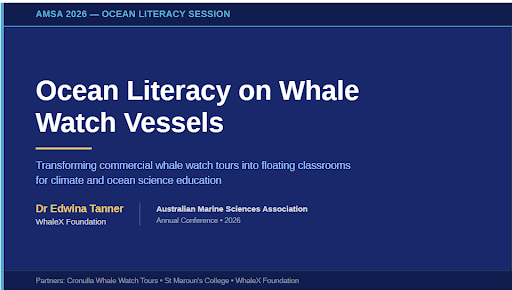
The WhaleX Foundation is presenting a poster about Ocean Literacy on Whale Watch Vessels at the Australian Marine Science Association Annual Conference to be held in Canberra, September 2026.
Join or donate to the WhaleX Crew
In addition to the scientific work, the WhaleX Foundation ran an end of financial year fundraiser in which Australian donors were provided with tax deductible gift receipts. Thank you to everyone who supported our efforts with your kind donations. The funds raised in this round are being used to further our experimental research and develop an education package based around using a PlanktoScope for schools, universities and citizen scientists. Donations small and large help us on our journey to restore ocean ecosystems from the bottom of the food chain to the top. WhaleX are continuing fundraising initiatives by building our donor network.
To donate, visit our website: https://www.whalexfoundation.org/