Newsletter #2 March 2026
We are pleased to confirm that the WhaleX Foundation Ltd has been registered as a charity by the Australian Charities and Not-for-profits Commission (ACNC) effective January 6, 2026. The Foundation has also been endorsed for Deductible Gift Receipt (DGR) status.
The WhaleX Foundation have big plans for this year, kicking things off by attending the Ocean Sciences Meeting (OSM) 2026 held at the Scottish Event Campus, in Glasgow. Early in the year, the Foundation are planning a series of microcosm experiments using 55 litre polyethylene terephthalate (PET) tanks which were originally designed for home brewing.
Additionally, the Foundation is developing an educational series based on the role of whale poo in boosting marine productivity, dubbed The Whale Pump, for distribution to whale watching and eco-cruise operators as well as citizen scientists and academics, later in the year.
Ocean Sciences Meeting (OSM) 2026, Glasgow
OSM 2026 was a large conference with nearly 6,000 attendees filing in and out over the week. OSM is co-organised and co-sponsored by the American Geophysical Union (AGU), the Association for the Sciences of Limnology and Oceanography (ASLO), and The Oceanography Society (TOS).
Given the number of attendees, there were a great many talks to attend and thousands of posters to view, so planning with the conference app was essential. There were interesting sessions on Modelling Approaches for Marine Carbon Dioxide Removal (mCDR) as well as numerous talks related to Ocean Alkalinity Enhancement (OAE), with a few posters presented by Exploring Ocean Iron Solutions (EXOIS).
These marine carbon dioxide removal approaches have relevance to the nourishment of microalgae, with macronutrients being investigated by the WhaleX Foundation as the effects of Ocean Alkalinity Enhancement on phytoplankton are reduced in areas where nutrients are not a limiting factor. With Ocean Iron Fertilization the addition of nitrogen and phosphorus to the waters can help to reduce down-stream effects of nutrient robbing.
It was interesting running into an old colleague from the University of Sydney, Professor Matthew England, who remembered Professor Ian Jones fondly and commented that wasn’t it fortuitous that his concept of ocean nourishment, using microalgae for marine carbon dioxide removal, is now one of the marine carbon dioxide solutions being debated at global science meetings. A highlight of the conference was meeting Dr Sam Lavender and having in-depth discussions on carbon sequestration modelling and developing an education campaign based on the role of whale poo in boosting marine productivity.
Our own Daniel Ng was also in attendance; he enjoyed the Autonomous Under Vehicle and early career sessions, and much was learned from the experience.
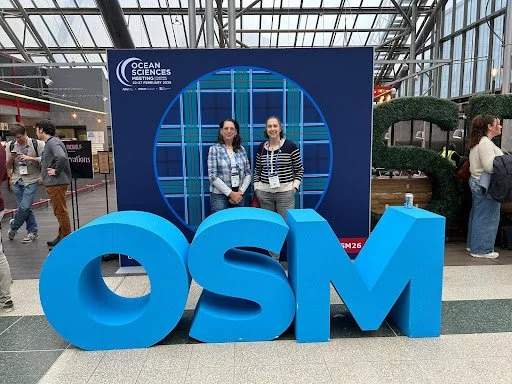
Drs Sam Lavender and Edwina Tanner are both directors of the Australian WhaleX Foundation, but had never met in person before.
WhaleX Experimental Focus
The detailed processes for the microcosm experiment are in development. Microcosms similar to the one being demonstrated by Rob Wheen and Daniel Ng, below, will be used in an experiment to determine the response of phytoplankton communities in waters off the east coast of Australia. This will be assessed following additions of iron, nitrogen and a biostimulant that mimics natural processes that boost ocean productivity and carbon export.
The water will be collected off the southeastern coast of Australia and will be incubated in a series of these 55 litre microcosms. These waters are characterised in summer by oligotrophic (low nutrient levels of nitrogen and phosphorus) as nearby coastal and open-ocean experiments have previously reported growth following nitrogen additions (Anthony James Edington, 2005; Harrison, 2017; Passos, 2018). Additionally, modelling studies have indicated that nitrogen fixers in this region may be limited by iron (Dutkiewicz et al., 2014; Moisander et al., 2012; Zehr & Capone, 2020). Therefore, three treatments will be implemented: iron-induced nitrogen fixation, direct addition of nitrogen (UAN) and testing of a proprietary biostimulant. Comparison of the different treatments will enable a better idea of which nutrients are optimal for an open ocean deployment.
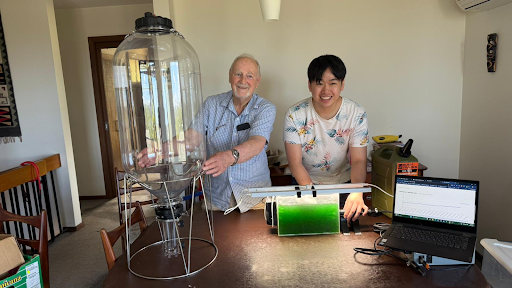
The microcosm experimental setup will use a series of 55 litre polyethylene terephthalate (PET) tanks, which were originally designed for home brewing, being demonstrated here by Rob Wheen and Daniel Ng.
Educating about the Whale Pump
Many people in the community are unaware of the significant role that great whales play in increasing productivity at the base of the marine food chain, which captures carbon from the atmosphere. A scientific article written by Joe Roman (2010) titled The Whale Pump, describes the enhanced primary productivity provided by whales primarily through the release of their flocculent fecal (nutrient) plumes.
The Whale Pump will be explored in an Education Series being developed by a group of WhaleX Foundation members and volunteers. The education modules, considering the role of whale poo and how we could enhance its impacts on ocean productivity, will be ready for release later this year.
The materials will be distributed to whale watch operators, academics, and citizen scientists to help spread the word about how to restore ocean ecosystems from the bottom of the food chain to the top while helping to remove carbon dioxide from the atmosphere.
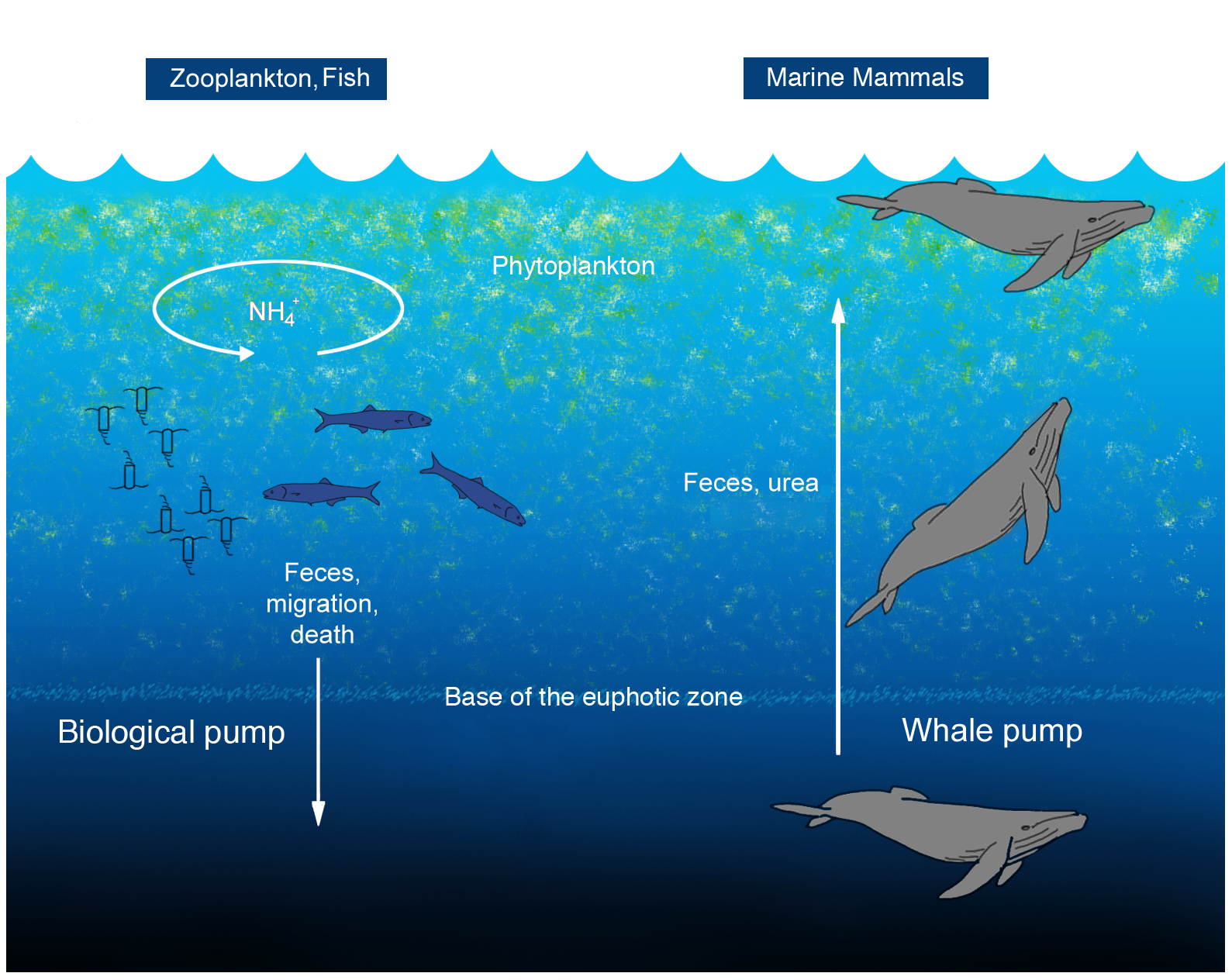
The Whale Pump: Marine Mammals Enhance Primary Productivity in a Coastal Basin from: Joe Roman, James J. McCarthy (2010)
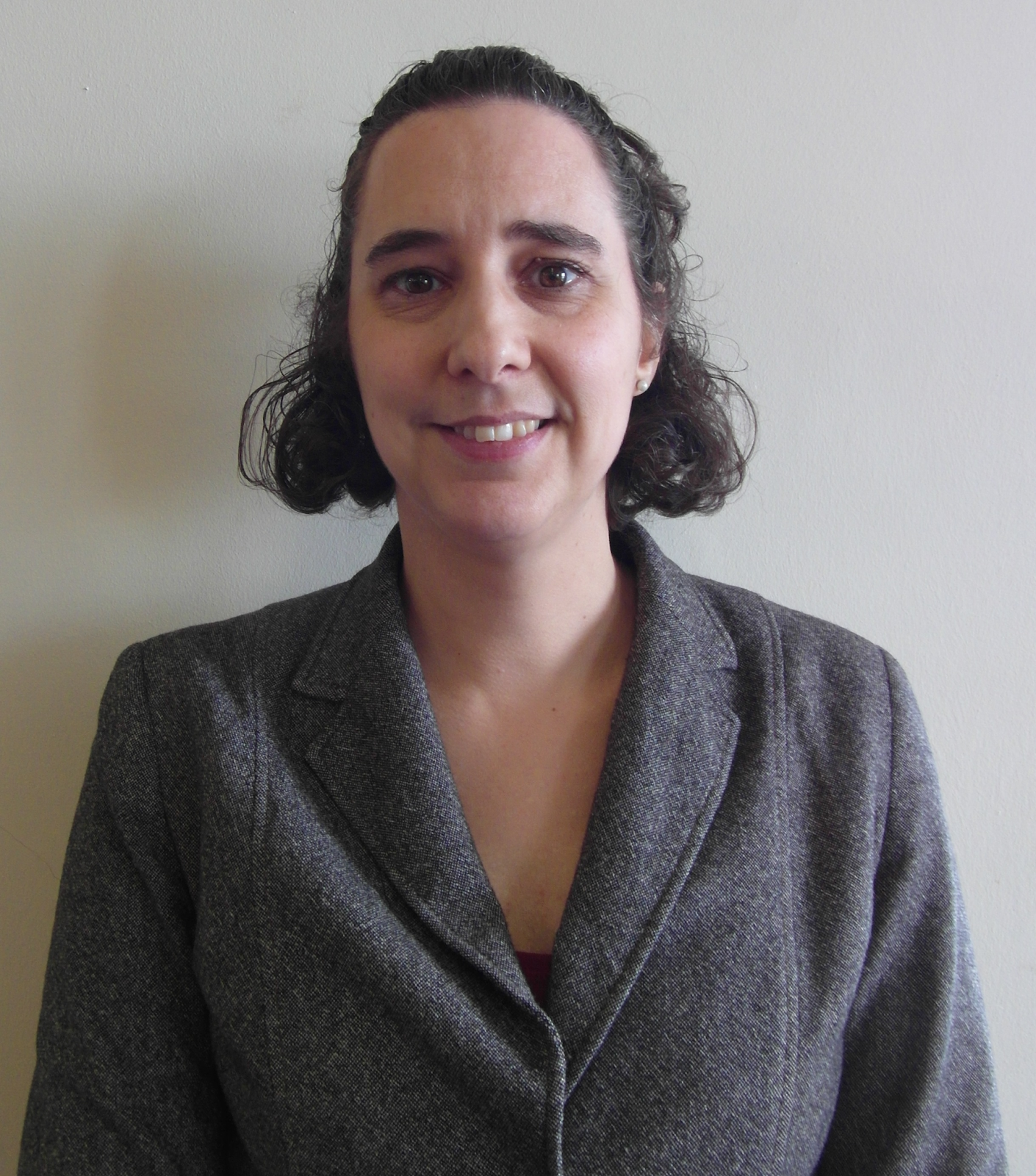
Dr Samantha Lavender
The WhaleX Foundation is honoured to have Dr Sam Lavender as a director on the Board. Sam is also the managing director of Pixalytics Ltd. Sam has over thirty years of experience in remote sensing, having been introduced to the field at Plymouth University while studying a BSc in Marine Science and Marine Computer Applications. Her focus is on the use of Earth Observation (EO) data to monitor and detect changes in the Earth’s natural environment. Sam loves to investigate solutions to questions, which includes deciding whether it might be possible and then prototyping a solution. Sam wrote a blog about her experience at the Ocean Science Meeting (2026) that you can read on the Pixalytics website here.
Community Focus
The meaningful involvement of communities in carbon project development and ecosystem restoration must include direct engagement. Connections with local and indigenous communities were established by the Ocean Nourishment Foundation when they deployed an Artificial Reef module in the waters around Fiji. Unfortunately, a cyclone swept this away however the concept of working with local and indigenous communities to build and install the reef structure using locally sourced materials was established and this ethic follows through to work currently being done by the Foundation today. We have now established connections with a number of community groups and aim to throw our net wider.
Publicity and Links
In order to collect water off the east coast of Australia for our experiments, the WhaleX crew use the Cronulla Whale Watch Vessel captained by Mike Abbott and Mal Steen. Their support has been invaluable. They run a fabulous whale watch cruise and it is well worth a trip on the Blue Cat to see some of the 40,000 humpback whales migrating along the east Australian coast from June to October 2026. To book a tour, get in touch with Cronulla Whale Watching.
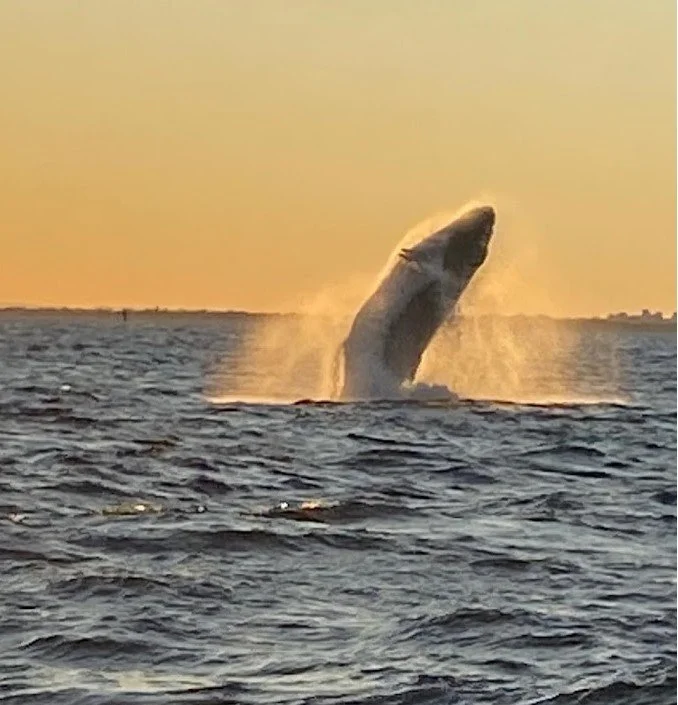
Beautiful Humpback whale breach
Join the WhaleX Crew
In order to be able to conduct scientific research, WhaleX are continuing fundraising initiatives and looking to build our donor network. Donations will go towards scientific studies through research and experimentation, and developing our education packages for whale watch operators, schools, universities and citizen scientists to help us on our journey to restore ocean ecosystems from the bottom of the food chain to the top.
To donate, visit our website: https://www.whalexfoundation.org/